If you work in a nonprofit, there’s a good chance you, or someone you know, has experimented with AI at some point this year. Your organization probably doesn’t have a policy about it. And you’ve probably been talked to death about whether nonprofit employees should be using AI at all.
So let’s skip that part of the conversation and get to the good stuff. The question almost no one is asking is this: what are grantmakers doing with AI? If everyone else in the nonprofit sector is quietly using the tech, do we really think the people holding the pursestrings are the only ones sitting this trend out?
Turns out they didn’t. And when you learn how funders are using AI, you’ll understand just how outdated the whole “should we” question really is.
How Are Grantmakers Using AI
The most comprehensive look we have comes from the 2024 State of Philanthropy Tech Survey from the Technology Association of Grantmakers (TAG). Their most recent report heard from more than 350 organizations. The key takeaway: 81% of respondents reported using AI in some capacity. (TAG SOP Tech Survey 2024, 2024) That is not outlier territory; it means the overwhelming majority of the people nonprofits send their proposals to are using AI in some form.
Before we start picturing robots shredding grant applications willy-nilly, let’s break that down a little. That same survey found AI use is wide but shallow. Only 4% of grantmakers have actually rolled AI out across their whole organization. 30% have some kind of AI policy on the books, which means the other 70% have no written rules at all. Sound familiar? Grantmakers are doing the same aggressively boring back-office grind as the rest of us – transcribing meeting notes, drafting memos, creating graphics for newsletters, and organizing their internal information.
Here’s the encouraging news: funders are not letting AI decide who gets funded
When Candid asked foundations directly whether they let generative AI screen applicants or help decide who receives funding, 97% said no. Only 1% said yes. (Candid, 2025) So for the vast majority of funders, an actual living, breathing person is still making the final call over who gets money. Which means we can all breathe a little easier. But not too much easier – because today’s no has an expiration date. When Candid asked those same funders whether they expected to use AI for screening or funding calls anytime soon, the “no” got shakier. Only 65% ruled it out. 19% said they were considering it, 3% expected to, and 12% weren’t sure. Do that math: as many as a third of funders have not closed the door on letting AI help decide who gets funded in the near future.
As federal money dries up, nonprofits are turning to private funders in droves; 87% of foundation leaders now report rising demand, with some already capping applications or going invite-only just to keep up. (1.9 Million Nonprofits, 100,000 Funders, 2026)
Saying no today is not the same as saying no forever. Eventually, funders will be buried under enough applications with too few hands to process them all, and not using AI stops being optional. That’s where things get both interesting and a little scary.
Because while funders aren’t letting AI anywhere near the actual yes or no right now, what’s happened instead is that AI has been wired into almost everything else. Starting with your numbers.
How Grantmakers Vet Your Financials
The Patrick J. McGovern Foundation built a tool called Grant Guardian that runs on Claude. It takes a nonprofit’s IRS Form 990 and other financial statements, pulls the figures, runs them against whatever financial-health criteria a funder decides matter to them, and hands back a score with a written summary the AI generates itself. Work that could take a program officer hours now takes a computer minutes. Over 400 grantmakers are using it right now. It’s free, and funders of all sizes – from the GitLab Foundation and United Way to mom-n-pop family foundations – are using this platform to inform their decision-making. A tool like that does not care one bit how persuasive you are. It only cares whether your numbers hold up. It is reading your financial health before a person ever gets to your story.
From Financial Health to Narrative Review
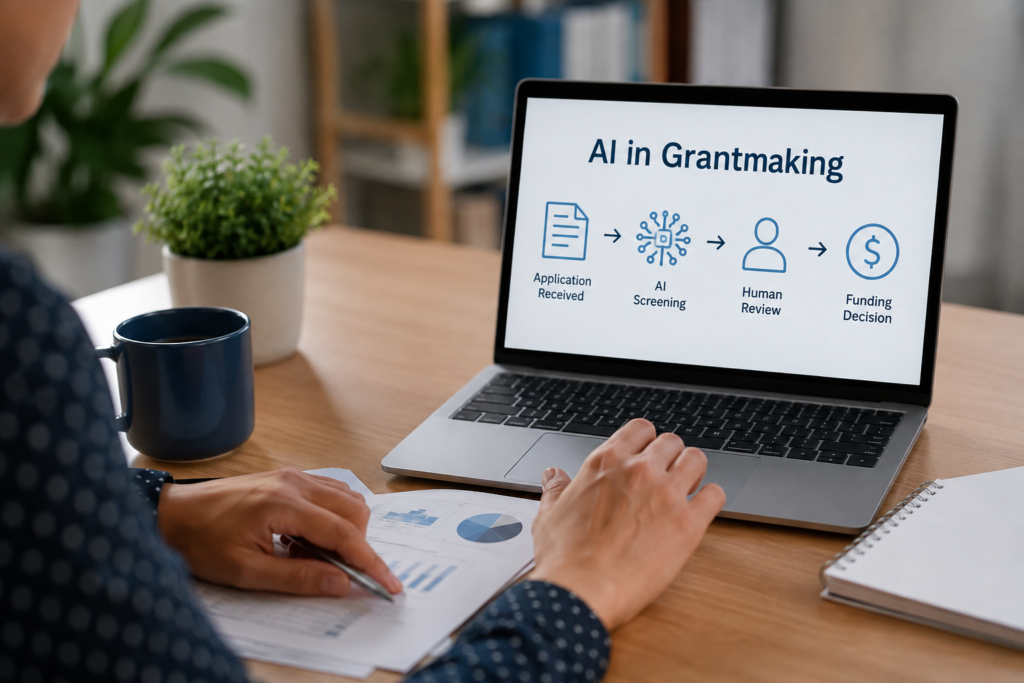
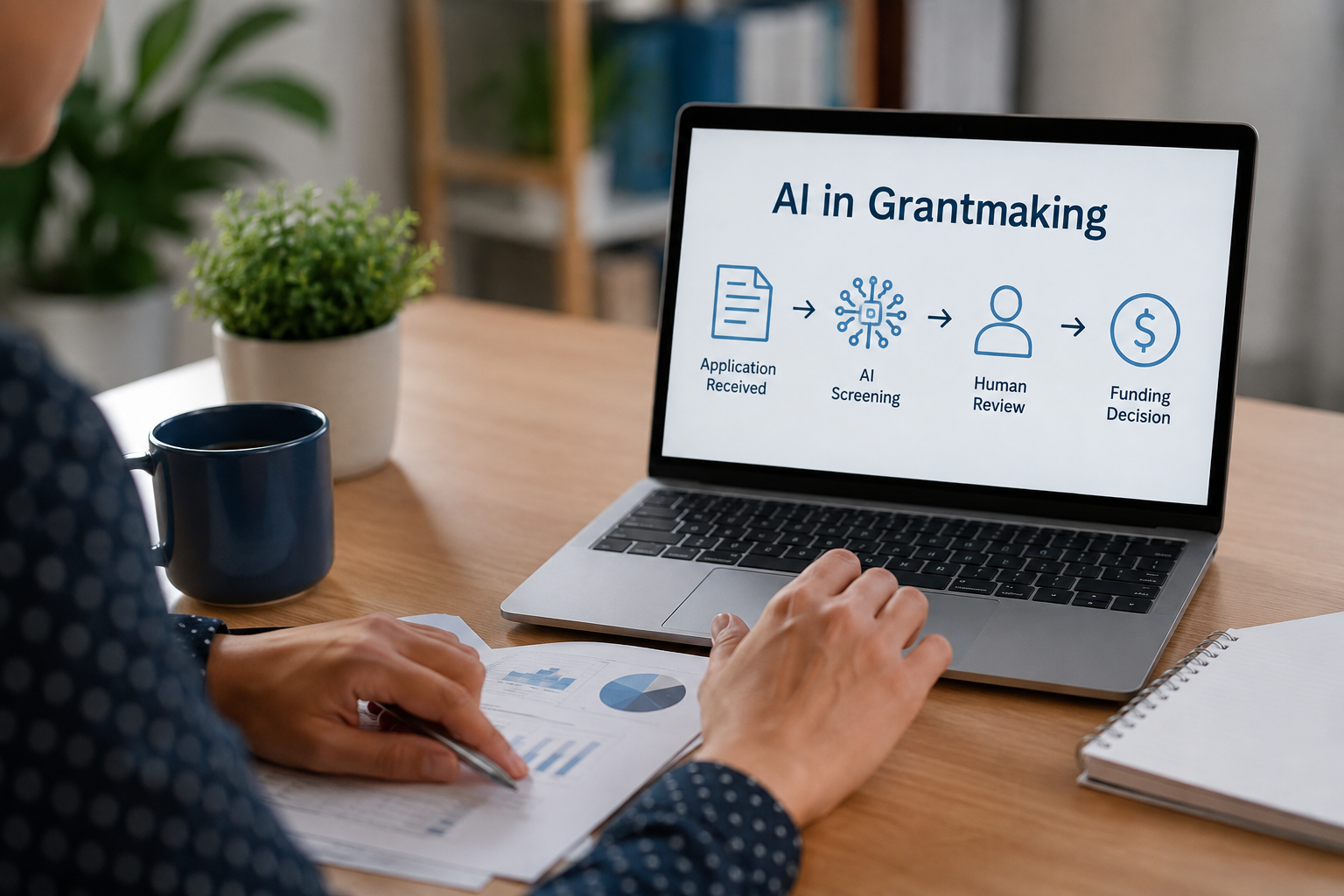
Nearly every major grants management platform now ships some version of this same product. Submittable’s AI tools can summarize your application and score it against a prompt the funder writes themselves, deciding what matters to them – like how well an applicant aligns with their mission – and then flag the outliers. Bonterra’s new platform Grantmaker folds AI straight into the intake and review process. Some tools now score every application the moment it lands, before a person even has a chance to open it. Kind of like how an ATS scans your resume for keywords and phrases before a recruiter ever reads it.
None of this is “AI decides who gets funding”… Technically
And that word is doing a lot of work. These companies are careful to say their tools assist humans rather than replace them, and technically, they’re right. The AI isn’t deciding whether you get money. Here’s what it’s actually doing instead.
First, it reads your application against what the funder said they want, their stated values, plus whatever they told the AI mattered most for this particular RFP. Then it scores how closely you matched those stated preferences, keywords, and assumed priorities, and ranks you against everyone else based on the company’s algorithm, which you don’t get to see, question, or account for. If there’s a summarization step, it writes the summary a reviewer reads instead of your actual words. Then, and only then, a human gets to work, going down the ranked pile in order.
Sit with that last part, because this is where it quietly gets unfair. The reviewer is still more than likely a living, breathing person – someone who typically read 20 to 100 applications a cycle in 2024 and is now staring down hundreds (sometimes thousands) of proposals in a single cycle because AI made the submission process faster and easier too. If the algorithm ranked you near the bottom, a tired reviewer reaches your application already worn down, primed to assume you’re a weaker match because the ranking told them so before they read a word. You didn’t get rejected. You got sorted. And some anecdotal reports from the first half of this year already suggest that in practice, this is running further ahead than funders are comfortable admitting to in surveys.
Write so the machines can’t get you wrong
No need to panic. We just need to get ahead of this new reality and start writing for it now. When AI is layered into how a funder forms a first impression of us, clarity and alignment stop being nice to have and start becoming mandatory. Summary tools are not flattering. If the AI can’t understand how we align with a funder’s priorities, or whether our finances hold up to their eligibility requirements, it’s going to be hard to make it through any kind of internal priority screening because AI can only report what it finds. It can’t interpret things on our behalf – it can only report what it can see. It is your job to say what you mean in the funder’s own words, and to make sure your numbers hold water, so the AI has something real to work with.
The Question Isn’t Whether You’re Using AI. It’s Whether You Use It Well
Here’s the main thing to know if you take away nothing else: AI is already here, and it’s probably been here far longer than we know. Grant writers use it to write. Grantmakers use it to read. The conversation about whether we should be using these tools is over; the tech is here. It’s already in many of our workflows. Most of us are using it – including the people with the checkbooks. That means the best questions to ask are the ones that truly matter:
- Are you using AI well – or just a lot and quickly?
- Do you know where these tools get things wrong?
- Are you catching those mistakes before they land in front of a funder?
That’s exactly what I’m covering in my webinar on August 18th: where AI can genuinely help with your work, the mistakes that are quietly going to sink your proposals (including the sneaky ones almost no one’s checking for), and the workflow I run my own proposals through every single time – human checkpoints and all.
Register today. It’s free, and if you can’t make it – or you just want more of this in your feed between now and then – connect with me on LinkedIn. This conversation doesn’t end when the webinar does, and that’s where I keep things going.
About the Author:
Carolyne Hevesi is a certified grant writer, nonprofit consultant, and founder of First Light Grants. She spent more than 15 years in the helping fields – from classrooms and addiction treatment to community health – before being voluntold into grant writing and discovering she was weirdly good at it. Since May 2024, Carolyne has used AI to develop and submit +60 proposals worth more than $4 million. She brings equal parts strategy, curiosity, and healthy skepticism to her work, and believes technology should make nonprofit professionals more capable, not just busier. When she isn’t chasing deadlines, she’s usually dancing at a loud concert, experimenting with new recipes, or negotiating over treats with her French bulldog Mando.]