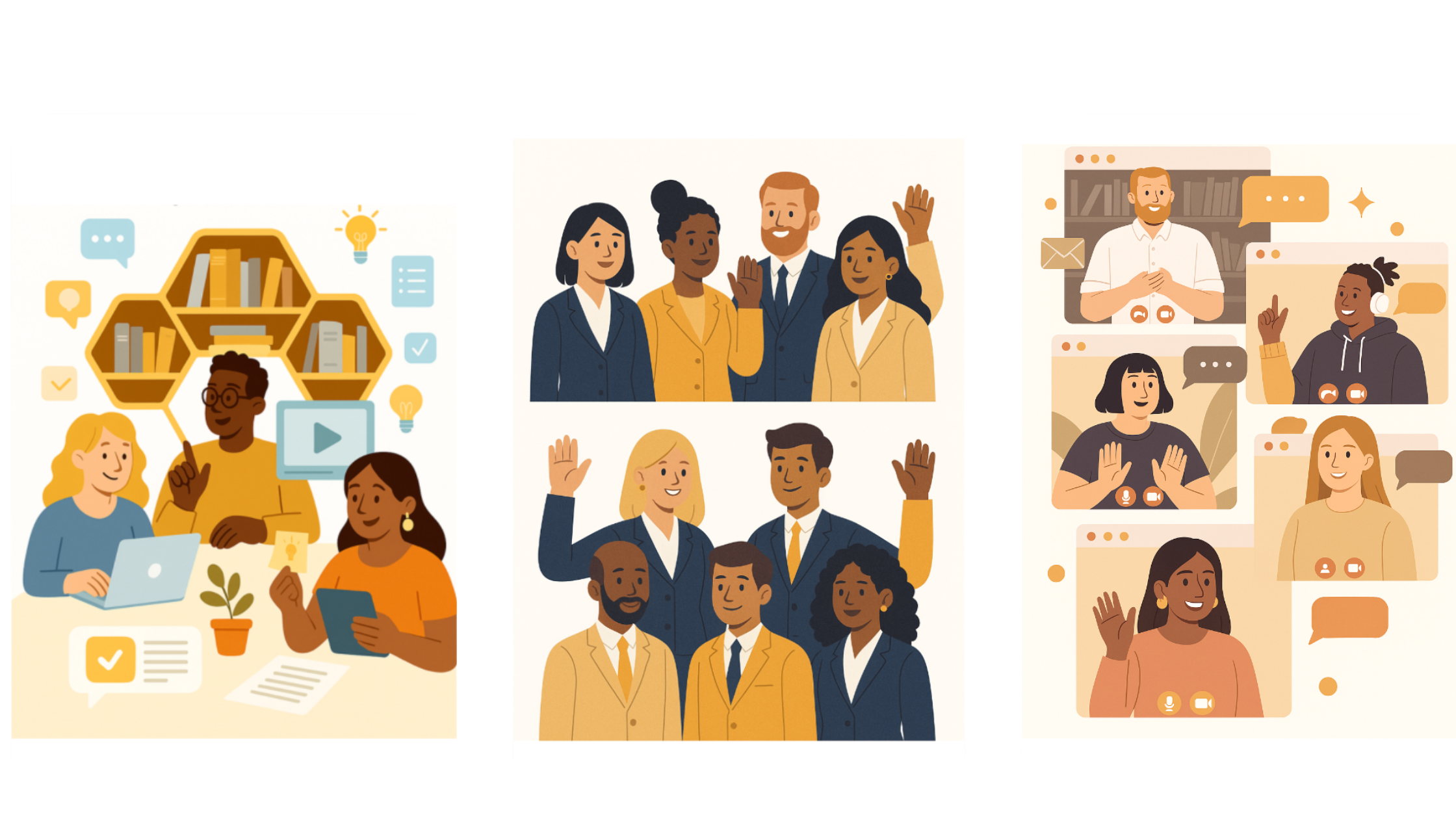
We’ve all been there. Your nonprofit launches a Slack channel, builds a Mighty Network, or sets up a private Facebook group. You post updates, share a few resources, maybe even toss out a poll.
And then… crickets.
It’s not that your cause isn’t important. Or that people don’t care.
It’s that technology doesn’t build community. People do.
And if your community strategy is centered around what you publish—rather than what you invite—you may be stuck in broadcast mode. And in the nonprofit world, where time and trust are both in short supply, that’s a fast track to disengagement.
When Platform ≠ Participation
Nonprofits are often told to “build community.” But too often, that gets interpreted as: launch a new space, add content, and cross your fingers.
The truth? A platform is just a venue. A beautifully designed space means nothing if your people don’t feel a reason to show up—or return.
At best, a platform gives you the potential for connection. At worst, it becomes yet another underused tool on your digital shelf—a ghost town full of PDFs and pinned posts no one ever sees.
If this sounds familiar, you’re not alone. This is one of the most common pain points I hear from fundraisers, marketers, and EDs trying to turn an “audience” into a community.
Common Traps Nonprofits Fall Into
As I’ve worked alongside nonprofit teams and watched digital communities evolve (and sometimes stall), a few patterns keep showing up. Despite best intentions and powerful missions, many organizations fall into the same traps—often without even realizing it. These are the moments where community potential turns into missed connection, and where effort doesn’t always equal engagement. Whether you’re launching a new platform or trying to revive an existing one, it’s worth asking: are we falling into one of these traps?
Here are a few of the most common traps I see inside the sector:
- Broadcast Over Belonging: We post updates, but don’t ask questions. We deliver messages, but forget to invite dialogue.
- Content Without Conversation: Even the best webinar or toolkit flops if no one’s talking about it afterward.
- Tracking Clicks, Not Connection: We celebrate open rates, but don’t measure whether people feel seen.
- Too Big to Feel Personal: Large groups without small-group moments often feel isolating, not inclusive.
The result? A lot of good intentions—and very little actual engagement.
Reframing What Community Is
Here’s a radical reframe for nonprofit teams:
Community isn’t a tool. It’s a practice.
It’s not where people show up. It’s how they feel when they do.
That’s why, at The Nonprofit Hive, we focus on what people actually want: consistent, meaningful, no-pressure peer connection. Not another login. Not another portal. Just 1:1 conversations that feel human and real.
Since launching in 2023, we’ve facilitated over 8,000 chats across 76+ countries. And we’re doing it without paid ads or flashy campaigns. Just consistent rhythms and clear rituals.
The Flywheel of Belonging

One of the frameworks I’ve leaned on while building The Hive is the idea of the flywheel, not the funnel.
Funnels extract. They’re about pushing people toward a conversion.
Flywheels build momentum. They’re about reinforcing identity, trust, and participation over time.
Here’s how we think about it:
- Invite – Extend a human invitation to connect. Not just a “Join our group!” but a real ask. Example: Instead of sending a generic email blast, a small nonprofit paired first-time event attendees with a volunteer greeter via email and offered to set up a quick intro chat. It tripled their return attendance.
- Engage – Spark storytelling. Create moments where people feel seen and heard. Example: One organization asked members to share one word that described their week during a live call—and used those words to kick off real conversation.
- Reflect – Share their voices, not just your own. Example: A community health org created a social post highlighting feedback from a recent listening session—and let members’ quotes take center stage.
- Reciprocate – Celebrate contributions. Acknowledge effort. Say thank you like you mean it. Example: After a successful campaign, one team sent personalized audio messages to each peer fundraiser thanking them for their specific efforts.
- Retain – Show up consistently. Ritual builds trust. Example: At The Nonprofit Hive, we match people for peer chats every Thursday like clockwork. That rhythm has kept engagement high, even a year later.
🌎Standout real world example: Somos Mayfair illustrates the transformative power of micro-communities built on cultural identity. By organizing parent-driven circles and peer groups, they foster rituals—like storytelling and mutual aid—that empower members and cultivate long-lasting interpersonal trust.
The result? People start to see themselves as part of something. Not just recipients of information, but contributors to a cause.
Nonprofit Community Rituals That Matter
We often think of stewardship as something that happens after a gift. But what if stewardship was the community?
How does this look in the wild? The Arthritis Foundation’s annual campaigns, such as their #ArthritisAwareness Challenge, use thoughtful rituals—like sharing supporter stories and public shoutouts—to turn members into celebrated contributors
What this might look like at your nonprofit:
- New donor welcome calls (with no agenda, just connection)
- Donorversary emails with personal voice notes or a favorite memory
- “Look what you helped build” updates framed as celebrations, not reports
- Legacy story walls where longtime supporters can share their “why”
Rituals build rhythm. And rhythm builds trust.
Ask Better Community Questions
If you want more engagement, start by asking better questions—not just sharing better content. Because here’s the thing: the best communities aren’t built on a stream of flawless posts—they’re built on shared moments of curiosity. Questions are the spark. They’re how you invite someone into a conversation, signal that their voice matters, and start turning passive readers into active participants.
When you lead with a question, you’re not just pushing content—you’re prompting reflection. You’re opening the door for someone else to share a story, contribute a perspective, or feel seen in their own experience. And that moment of interaction? That’s where real connection lives.
Great community questions don’t have to be complex. In fact, the simpler, the better. Try:
- What’s one small win you had this week?
- What’s something you wish others in the sector understood?
- What’s keeping you up at night—and what’s giving you hope?
The goal isn’t just engagement for the sake of metrics. It’s about inviting people into a space where they feel safe showing up fully. When you ask better questions, you’re not just creating content—you’re creating culture.
Try these tests before your next post or email:
- Could this exist as a newsletter with no change? (If yes, it might not be community content.)
- Am I inviting a response—or just delivering an update?
- Have I made space for others to add, challenge, or co-create?
At The Hive, we’ve seen that one good question often gets more traction than ten polished PDFs.
What Nonprofits Can Do Right Now While Building Community
You don’t need a 12-month plan or a new platform to start building a real community.
Just try one of these:
Introduce a new ritual – A welcome message. A mini-match-up. A shared moment.
Share the mic – Ask a supporter to tell their story in your next campaign.
Create one small group – Pair peer fundraisers. Introduce new EDs. Start where it’s personal.
Your goal isn’t scale—it’s depth. And depth comes from doing one thing well.
Connection Is the Strategy
Here’s what I’ve learned:
Nonprofit community isn’t about managing more spaces.
It’s about designing for belonging.
And belonging doesn’t scale through volume. It scales through intention.
So before you launch your next campaign, ask:
- Are we designing this for connection—or for consumption?
- Are we measuring engagement—or just reach?
- Are we building community—or just adding content?
The best nonprofit communities in 2025 won’t be the biggest. Or the busiest.
They’ll be the ones where people feel seen. The ones that turn strangers into collaborators. The ones that matter.
Curious how this could look inside your organization?
Check out Community Hives—our lightweight, tech-powered way to build real connection through 1:1 peer matchups. Or join The Nonprofit Hive to experience it yourself.
Let’s stop shouting into the void. Let’s start building something people want to come back to.
————————————————————————
Tasha Van Vlack is a community strategist and the Founder of The Nonprofit Hive, a platform that has connected thousands of nonprofit professionals across 75+ countries for 1:1 peer conversations. She’s also the creator of Community Hives, a B2B engagement tool that helps associations, networks, and membership groups turn passive audiences into active communities. Tasha writes and speaks regularly about community, belonging, and sustainable engagement in the nonprofit sector.